

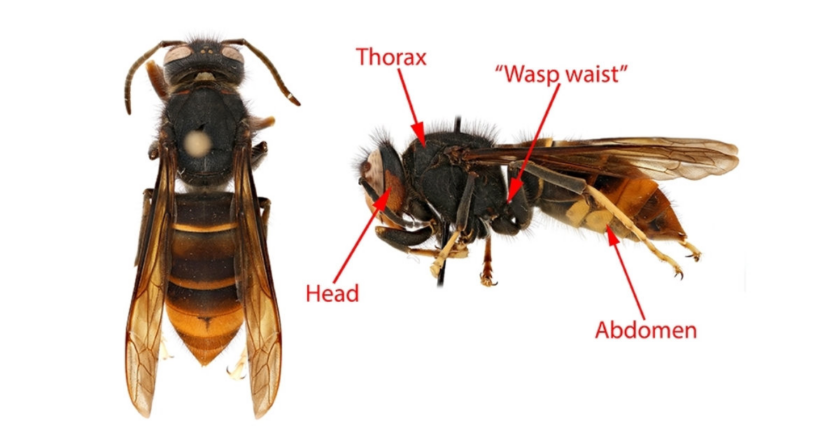
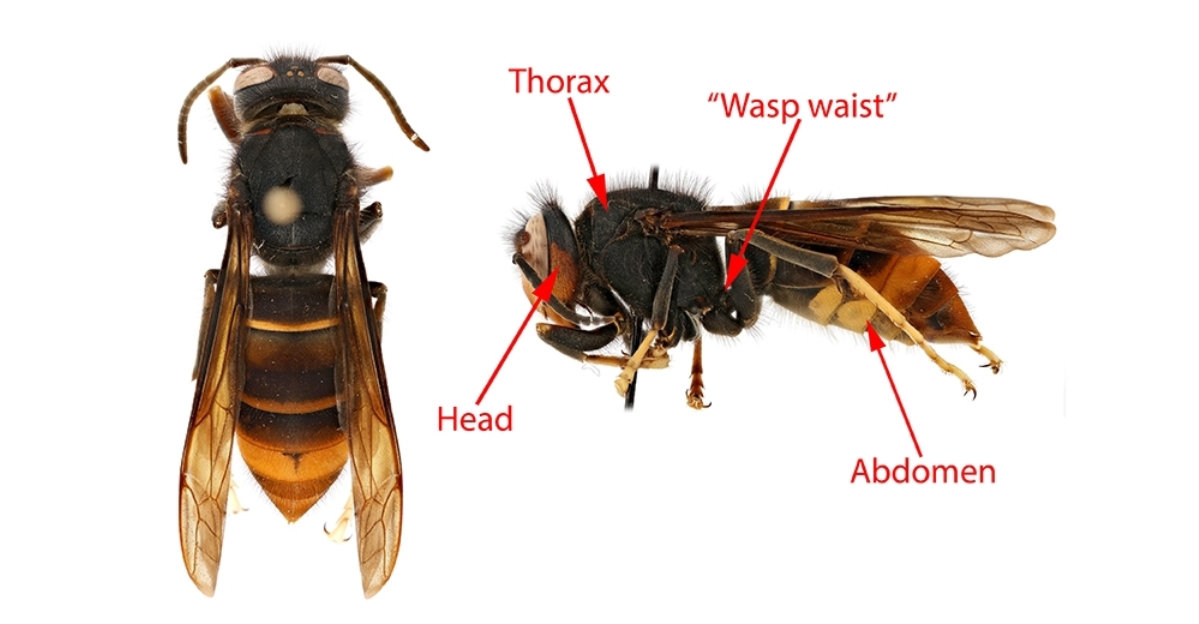
| The yellow-legged hornet (Vespa velutina), an invasive insect known to prey on bees and potentially wipe out beehives, has been confirmed in North Carolina for the first time. No one knows when it will reach the mountains, but the TCBA is happy to welcome Clemson University Apiculturist Benjamin Powell to help educate local beekeepers on this hornet and discuss possible methods of control and hive protection. The meeting starts at 6 p.m. Tuesday, Aug. 25, with a bee community social at Trinity Episcopal Church, 15 Hemlock Ave., Spruce Pine. Powell’s presentation will begin at 6:30 p.m. The meeting is open to the public. Powell runs the University Honey Bee Lab and Clemson’s Apiculture and Pollinator Program. His location in South Carolina and role studying infectious bee diseases and other honey bee threats put him on the front lines of the yellow-legged hornet invasion. Clemson manages more than 4,000 traps across South Carolina, which it uses to capture emerging queens and map the hornet’s trajectory. Because the honey bee’s role as a pollinator is critical to the nation’s food supply, the spread of the yellow-legged hornet is both an economic and environmental threat. Powell is expected to help beekeepers in Mitchell, Avery, and Yancey counties prepare to meet this threat. Report Any Sightings This time of year, the yellow-legged hornet’s nests are found high in trees and may be as big as 20 to 30 inches tall. Unlike the gray nests of our native bald-faced hornets, the yellow-legged hornet nests are tan, yellow, or reddish brown. Many wasps and hornets look alike, and it can be easy to confuse the yellow-legged hornet with other hornets or wasps. One key difference is their “yellow socks,” meaning the lower portion or tips of their legs are bright golden yellow. The hornet is about twice the size of a honey bee or yellow jacket and has a dark thorax. Their abdomen is often dark with a thin yellow stripe and gets lighter towards its tip. The hornets are often spotted “hawking” or hovering outside a beehive entrance or a flower where they ambush both honey bees and native bees. Well-known Georgia beekeeper Bob Binnie reported losing two entire bee yards last year to the yellow-legged hornet. If you spot a hornet matching this description, take a photo or video of it and upload it to the NC Department of Agriculture’s Yellow-Legged Hornet Reporting Tool. |
Comments are closed